

NCCR Catalysis Trailblazers: Vera Giulimondi

For our third Trailblazers feature, meet Vera Giulimondi! A recent graduate from Prof. Javier Pérez-Ramírez’ group at ETH Zurich, she won the EFCATS Best PhD Award, which was presented at EuropaCat 2025 in Trondheim! Fascinated by science and chemistry from a young age, she is a scientist at heart and was involved in multiple collaborations in academia and with industry.
Congratulations on the important recognition of your PhD work, Vera! Could you tell us about yourself and your research within NCCR Catalysis?
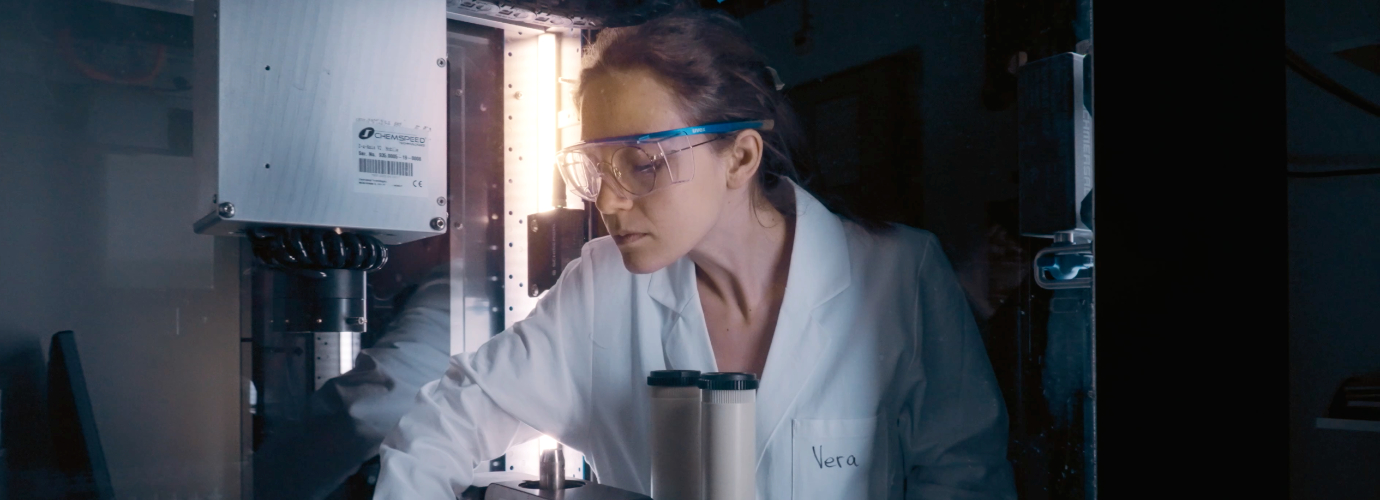
Within NCCR Catalysis, I was a PhD student in Prof. Javier Pérez-Ramírez’s group at ETH Zurich, working on tailoring heterogeneous catalysts with atomic precision to make chemical technologies more sustainable. Most recently, I studied platinum single-atom catalysts as replacements for toxic mercury-based catalysts in acetylene hydrochlorination, a key process in producing PVC plastic in China. My aim was to understand how platinum single-atom catalysts work and tune their structure to bring lab-developed materials closer to commercialization.
What made you consider a career in science, and what/who got you interested in science in the first place?
My career path was shaped by both my family and education. My parents always encouraged me to explore science as a child and gifted me a little alchemist set. I fell in love with it and spent days mixing things, watching colors swirl, or even making miniature explosions! But this childhood passion could only evolve into a career path thanks to dedicated teachers and professors who helped make chemistry and engineering accessible, understandable, and even more captivating.
Where are you from, and what is your background?
I’m from Italy and moved to Switzerland for my Master’s in Chemical Engineering at EPFL. I was attracted to the international environment in Swiss universities and the diverse offerings in chemistry, materials science, engineering, and sustainability. During my studies, I interned in the R&D department of a watch manufacturing company, where I saw firsthand how chemistry and materials science are applied in the industry. I also had the opportunity to conduct my Master’s thesis in the United States, focusing on electrocatalysis for CO2 reduction. This experience sparked a keen passion for catalytic technologies, which led me to join the aCe group of Prof. Javier Pérez-Ramírez at ETH Zurich.
What value has NCCR Catalysis brought to you as an early-career researcher?
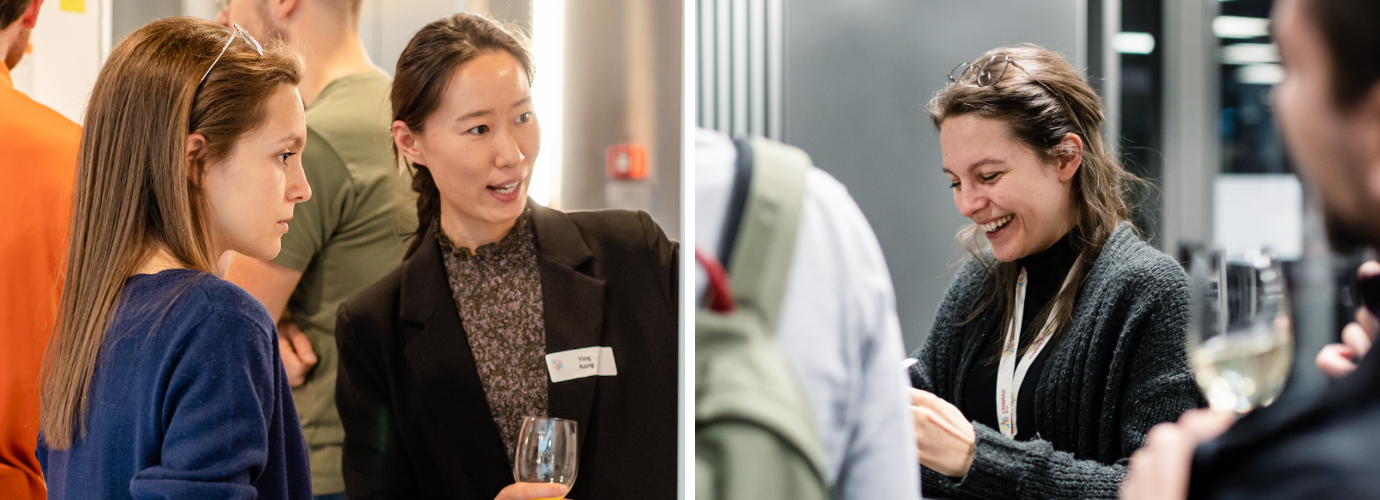
NCCR Catalysis is a cradle of ideas! As a PhD student, exposure to various aspects of catalysis is an excellent stimulus for one’s research. I was able to collaborate with researchers of diverse expertise, from advanced spectroscopy to computational analyses and life-cycle assessments, respectively, with the groups of Prof. Gunnar Jeschke, Prof. Maarten Nachtegaal, Prof. Núria López and Prof. Gonzalo Guillén-Gosálbez. These interdisciplinary studies helped me gain insight into multiscale questions, from atomic-level phenomena to the economic and environmental impact of the catalytic technology we are developing.
From a personal perspective, but not of lesser importance, these collaborations have fostered lasting connections and friendships.
What did you learn from working with industry during your PhD?
It provided valuable insights into translating fundamental science into practical solutions, considering scalability, cost-efficiency, and sustainability. A key focus of my work was highlighting the importance of toxicity analyses in early-stage catalyst development, which is essential for ensuring that the manufacturing of the new catalyst is benign to human health and the environment.
What have been your personal highlights of your time as a doctoral researcher?
A highlight of my PhD was conducting synchrotron experiments on single metal atom catalysts under reaction conditions. The challenge was bringing highly corrosive chemistry, involving halogens for vinyl chloride synthesis, to the synchrotron, requiring careful experiment design and safety assessments. Additionally, the experiments had to be completed within a tight timeframe. Overcoming these hurdles provided unique insights into catalyst behavior, making it a highly rewarding experience.
Furthermore, having the opportunity to present my results at conferences like EuropaCat 2023 in Prague, made possible by the SCNAT Chemistry Travel Award, further enriched my research through stimulating discussions and fresh perspectives.

What advice would you give other female early-career researchers in STEM?
My advice to women considering a PhD program in STEM is to choose a topic that sparks their interest and plan a clear roadmap with the help of mentors. Seek advisors who support you and challenge and stimulate your growth. Find a research environment that fosters your confidence, and consider international settings for diverse perspectives and less polarization. I also recommend joining associations and have found tremendous value in participating in events organized by women in science societies, which offer networking opportunities and inspiration from fellow female researchers.
You completed your PhD studies. What will be your next adventure?
I truly enjoy delving into fundamental research, but I am equally intrigued by the prospect of applying this knowledge to practical ends. From laboratory experimentation to commercialization, research is vital for driving innovation across different stages of development. Looking forward, I am eager to leverage the skills I have developed in my PhD studies and contribute to advancing chemical technologies for greater efficiency and sustainability.
Thank you so much for sharing your experience! Congratulations again, and we wish you the very best for your next steps.
Learn more about Vera’s research here and here, and connect with her on LinkedIn.
 tweet
tweet