

NCCR Catalysis Trailblazers: Abhinandan Nabera

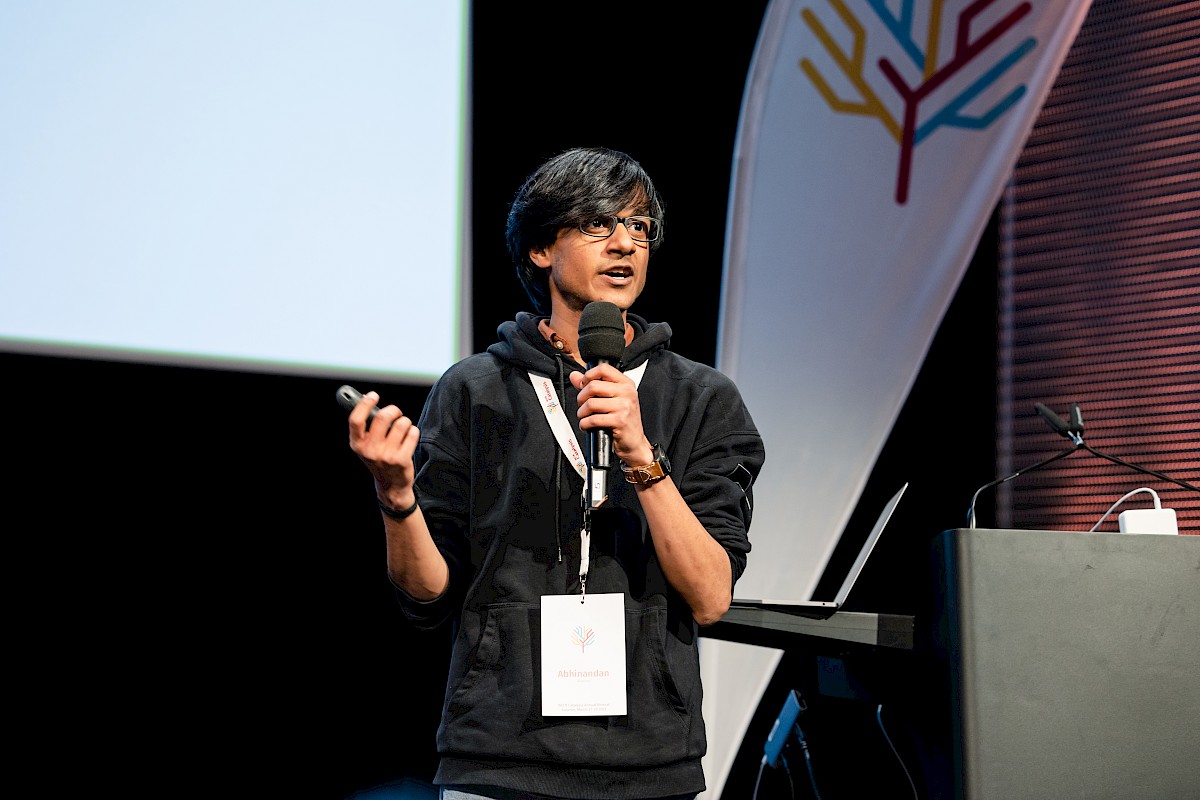
How can we ensure that tomorrow's green technologies are genuinely sustainable? We spoke with Abhinandan Nabera, whose PhD research at ETH Zurich combines catalysis with systems-level sustainability assessment to tackle exactly that challenge. He discusses the value of interdisciplinary research, collaboration across scientific fields, and the experiences that have shaped his journey as a researcher.
1. Tell us a little about yourself and your academic journey so far.
I’m Abhinandan, and I grew up in Chennai, India. As a kid, I spent hours taking apart RC cars and helicopters to figure out how they worked. That curiosity eventually led me to engineering, and I chose to study chemical engineering at NIT Tiruchirappalli before moving to ETH Zurich for my master’s degree. At ETH, I was introduced to life cycle assessment and sustainability analysis. I found myself drawn to a bigger question: are our green alternatives truly sustainable when we consider the whole picture? That question has shaped everything I’ve done since. I went on to pursue my PhD with Prof. Gonzalo Guillén-Gosálbez and Prof. Javier Pérez-Ramírez, where NCCR Catalysis gave me the opportunity to work at the intersection of process systems engineering and catalysis.
2. Can you describe your PhD research and the scientific challenge you are working to address?
My PhD asks a simple question: how do we know whether a greener way of producing a chemical is actually more sustainable? The chemical sector is responsible for around 10% of global greenhouse gas emissions, and many alternative production routes have been proposed, including CO₂ utilization, biomass, and plastic recycling. However, it is essential to assess whether these alternatives truly deliver environmental benefits. My research develops assessment frameworks that combine economic, environmental, safety, and resource-use metrics – something that is closely aligned with NCCR Catalysis' mission – allowing emerging technologies to be compared on a common basis before they reach industrial scale. Throughout my PhD, I worked closely with catalysis groups within NCCR Catalysis, using real experimental data rather than relying solely on assumptions, which made the assessments more realistic and relevant.
3. NCCR Catalysis fosters joint PhD projects across research groups. How would you describe your experience of being part of two research groups?
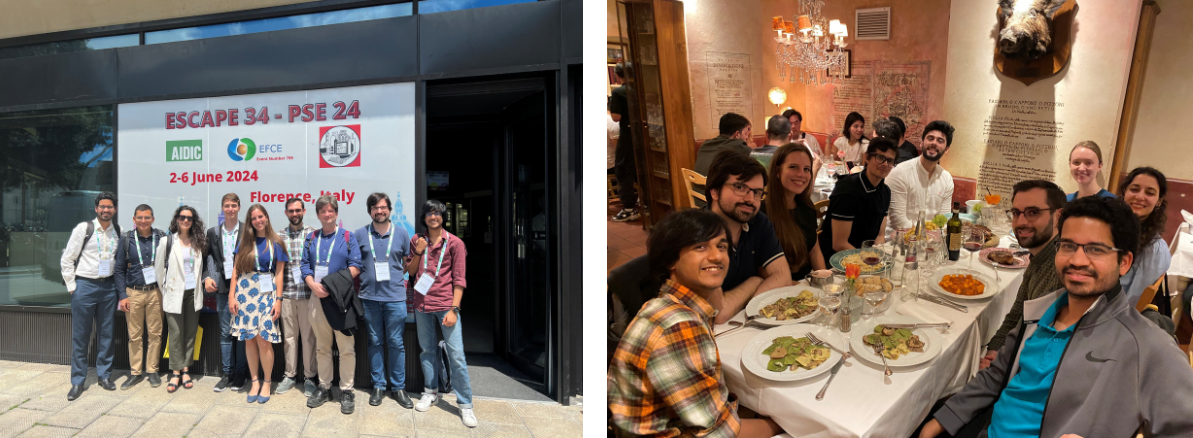
Being part of two research groups was the defining feature of my PhD and, at the same time, its greatest strength. I worked between the process systems engineering and catalysis communities – two fields that approach the same challenges from different perspectives.
Moving between them every day meant constantly learning, translating ideas, and finding a common language. It wasn’t always easy, and at the beginning the two perspectives often felt quite far apart. Over time, though, that gap became much smaller, thanks to the support and openness of collaborators from both groups. One of the biggest lessons from my PhD is that some of the most valuable research happens at the boundaries between disciplines rather than within a single field.
4. In many collaborations, researchers remain primarily anchored in their own groups while interacting with others. In your case, the integration has been much deeper. What has made this level of collaboration possible?
For me, the key was moving from simply exchanging results to building genuine feedback loops. Rather than working in parallel, we created a process where my modelling helped guide the design of catalytic systems, while experimental results continuously improved my system-level analysis. This only worked because the expertise on both sides was truly complementary, connecting what happens inside the reactor with what happens at the process and systems level – something no single discipline could achieve on its own. Trust and shared goals were equally important. They developed gradually through years of working together on common challenges. NCCR Catalysis played a vital role by bringing different communities together, lowering barriers between disciplines, and creating an environment where this kind of collaboration became natural.
5. Beyond the scientific results, what has been the most rewarding aspect of your doctoral journey?
What I’ll remember most are the people. Having two supervisors meant benefiting from two different ways of thinking, which shaped me as a researcher far more than any individual result. Teamwork was just as important. Through NCCR Catalysis, I had the opportunity to interact with researchers from many different fields, and their questions often challenged me to rethink my own approach. Those exchanges changed how I work, teaching me to listen before defending an idea and to view problems from someone else’s perspective before jumping to conclusions. On a personal level, I also became more patient and more comfortable with uncertainty, learning to trust the research process even when the way forward wasn’t immediately clear.
6. What have you learned about yourself throughout this process?
More than any technical skill, my PhD taught me patience. Research rarely follows a straight path, and I learned to deal with uncertainty without losing confidence in the process. I also realized how much I value the people around me. I’m incredibly grateful to my supervisors and collaborators, who were always willing to answer questions, offer new ideas, or help me look at a problem from a different angle. Along the way, I also became less attached to individual outcomes and more focused on the learning process itself. That shift made it much easier to deal with setbacks and keep moving forward.
7. What advice would you give to young researchers considering interdisciplinary or highly collaborative PhD projects?
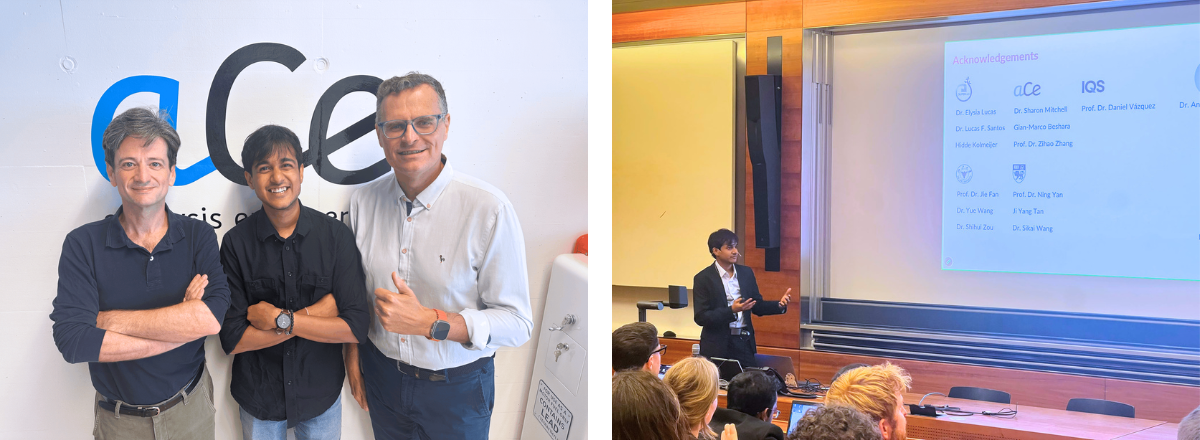
My biggest piece of advice is to stay genuinely open and not be afraid to ask questions, even if they seem basic. The most interesting ideas often emerge outside your comfort zone. I would also encourage young researchers to invest in relationships, not just in results. Be willing to help others when they need it. Those small interactions build trust, and trust is what makes strong collaborations possible. In the end, successful interdisciplinary research is built just as much on communication and openness as it is on technical expertise.
8. Looking ahead, what are your next steps and aspirations?
I would like to continue working in sustainability, developing practical metrics that help measure how sustainable a technology really is and making those tools accessible to non-experts. My hope is that sustainability assessment becomes a routine part of technology development, so that environmental impacts are evaluated early, transparently, and alongside technical performance.
Thank you so much for sharing your experience! We wish you the very best for your next steps.
Learn more about Abhi’s research here and connect with him on LinkedIn.
 tweet
tweet